Lisbon:
An amazing, historical city to kick off our trip. There’s so much history here that it would be worth another trip back, plus it’s only 7 or so hours direct from O’Hare Airport. The Portuguese culture, warmth of their people, fresh seafood, history was fantastic to experience on our first stop. Their history goes back to Muslim rule initially, with much of the architecture in the Alfama neighborhood resembling that of Muslim design.
One of the best ways to see the city is through a tuk-tuk tour, which is a 3 wheel buggy that takes you through the winding streets and hills of Portugal’s capital. It’s an efficient way to hit all of the popular viewpoints of the city called “miradouros”, churches and get a quick glimpse into Portugal’s history – which includes Portugal being the first to discover India, why so many buildings have beautiful tile designs on the outside and so much more. We had Ricardo as our tuk-tuk guide and would absolutely recommend him.
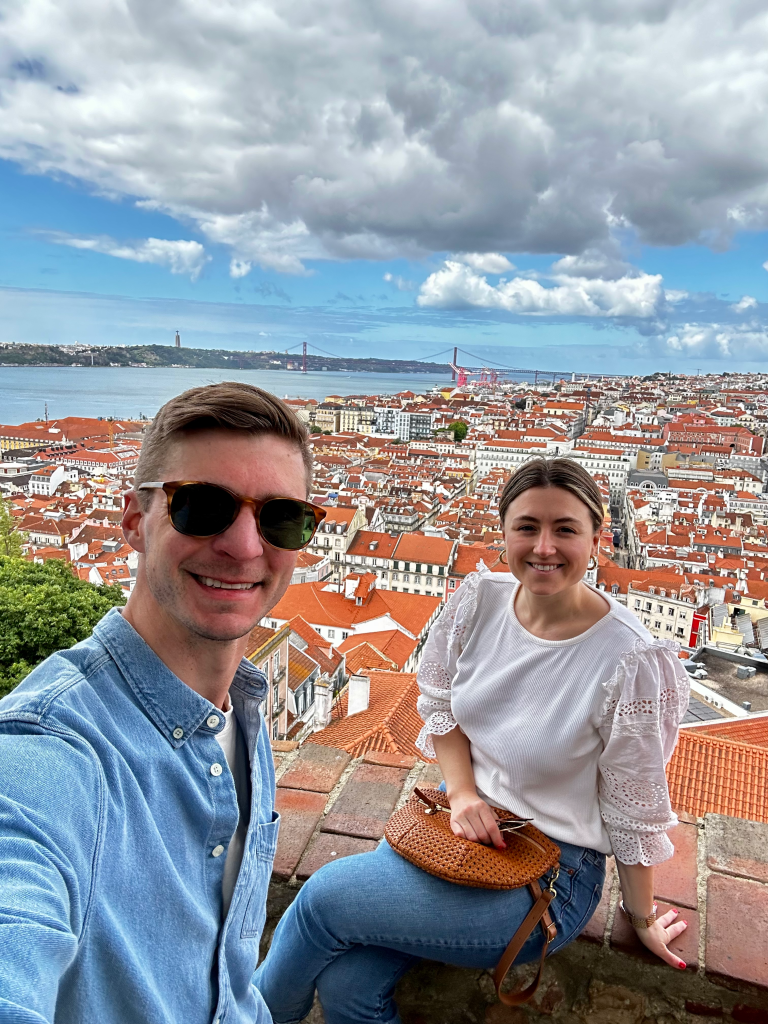
Our favorite neighborhoods to explore were Bairro Alto (where our Airbnb was located), Alfama and Principe Real. We stayed right outside the Miradouro de São Pedro de Alcântara which gives you breathtaking views of the city which sits right on the Tagus river. Alfama is the old town neighborhood which starts at the top, Castelo de Sao Jorge and leads you downhill to the base of the city center alongside the river. Touring Castelo de Sao Jorge was a highlight of our time in Lisbon, it is the highest point of the city and gives you sweeping views of the city (below).
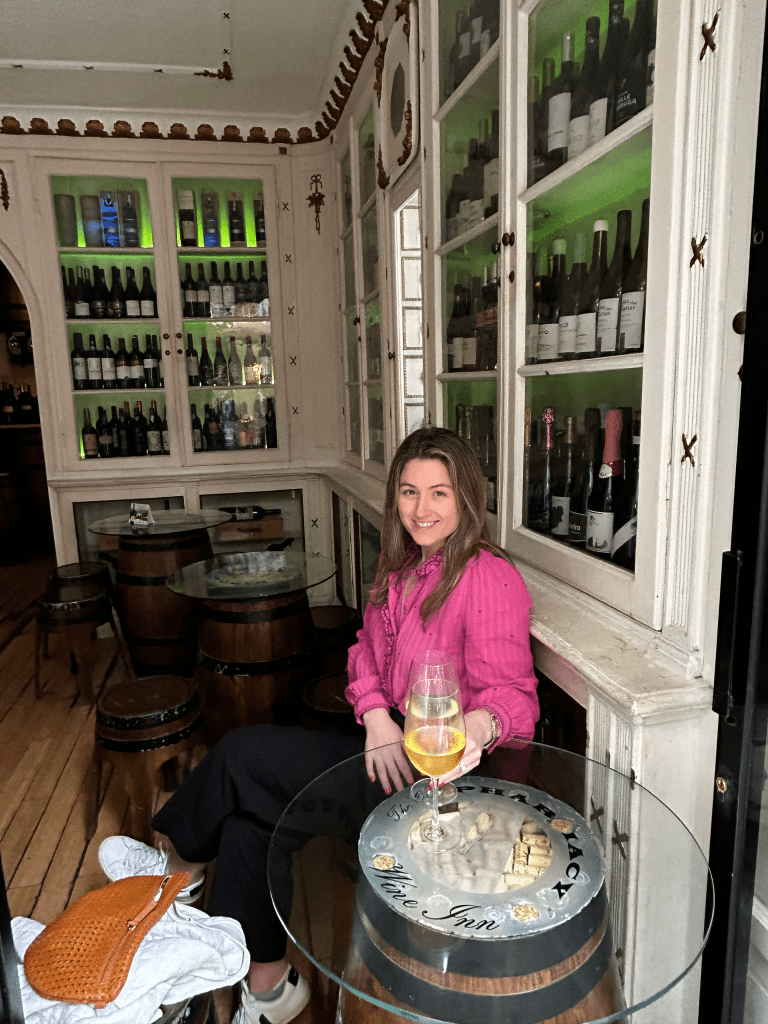
While in Lisbon, we booked a Food and Wine dinner experience through Airbnb, which came by a recommendation of Sadie and Sammy. This was hosted by wine expert André and his culinary chef Diogo, both Portuguese born, in a stunning apartment. At the surface, we knew this extrovert type social event would get us a bit out of our comfort zone as you mingle with other guests from around the world. This was certainly accurate, and will always remain a special memory for our 3rd wedding anniversary dinner. We walked away, albeit at 2am, with a greater appreciation for Portuguese food, wine and perspectives of other diners who shared about their story.
Other highlights and must dos: Timeout food market and Fado music. Timeout opened their first ever food market with over 20 restaurants the have stations in this huge market hall. So much fresh seafood that you can’t go wrong with wherever you decide to stop. Fado music is a melancholy-like type of music that is traditional to Portugal but more specifically Lisbon. Many of the songs talk about history, love, the sea, Lisbon and more. It is one of the primary ways of storytelling back in the early 1800s. We booked Clube de Fado which is very touristy but we figured it was a good way for us to get a decent dinner and a better show without having to do much research.
We also explored the Belém neighborhood on a half day trip which is famous for the Belém tower, Jerónimo’s Monestary and the famous Pastéis de Belém custard snack. We stopped by LX Factory which is a indoor/outdoor shopping, restaurant and bar center on the way back from Belém neighborhood into Lisbon. If you have time, Belém is cool to see for a half day. If you have even more time, we’ve heard and read good things about Sintra but we were not able to squeeze that in.
Public transit is very reasonable and efficient, but sometime not too straightforward. The cost of Uber and Bolt (must download) made it too easy to not use Bolt the whole time in Portugal. Average Bolt ride of 3 to 7 Euro from anywhere in the city. All in all, we would absolutely recommend and visit Lisbon again!
Lagos:
La-goosh, as pronounced in the Portuguese language, located in the Algarve region of Portugal was a destination for kicking the feet back, relaxing and enjoying full sun. It is accessible by plane or train to Faro, or bus which took us right to the stop in the town center. It’s a quant, highly tourist town but luckily we caught it right before the summer rush and still got the 70 and sunny weather. This region is super unique and often compared to sunny southern California weather. The coast is lined with amazing sand beaches and cliffs that overlook the Atlantic.
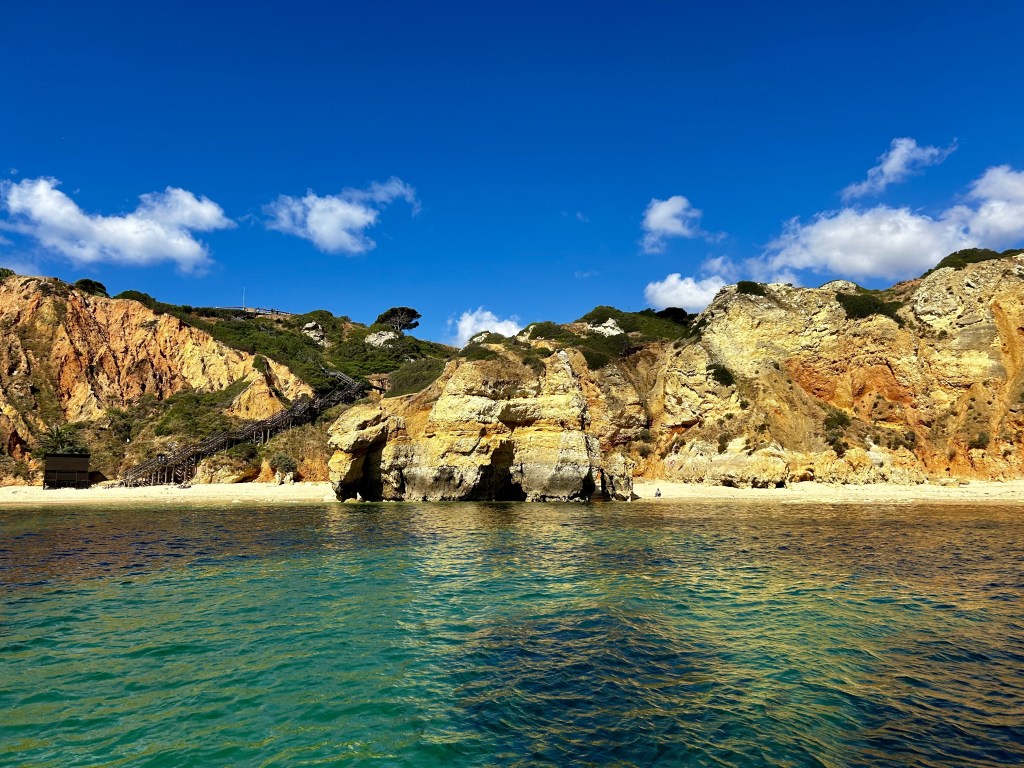
While in Lagos, we booked a boat tour that took us near the infamous caves and into Ponte de Piedade which is a group of rock formations in the ocean right off the 100+ foot cliff and Piedade viewpoint. You can hike the coastline to Ponte de Piedade from Praia Dona Ana (beach near the town) but we opted to take the scenic route on the water with a local guide for 10 to 15 euro per person!
You can spend a whole week bopping around the Algarve region. We found the day and a half to be enough rejuvenation to get us back in travel mode and off to Spain.
Seville:
Our first stop in Spain, Sevilla. We had heard much about Seville and were very much looking forward to this stop. A couple of quick facts: there are over 1,000 tapas restaurants, Christopher Columbus was often a visitor to Alcazar (the first royal palace of Spain) because they sponsored his many visits to the Americas and the locals don’t necessarily drink sangria – who would’ve thought. The history in Seville, especially within the Alcazar, is something to admire. Much of the architecture of the buildings and main attractions resembles that of Muslim design because they took over after the fall of the Roman empire. And they ruled Seville for just over 500 years.
We visited countless tapas bars and tinto de verano (try one wherever you are in Spain, simple yet delicious) and a food tour across the city that got us to try traditional dishes like iberico jamón, spinach and chickpeas as well as different cuts of pork with french fries – what a tasty combo.
One of the local experiences we did was a La Liga soccer game between Real Betis, one of the two Seville teams, and Real Sociedad. This was a true local experience, where we really didn’t know much about what to expect. And English wasn’t used around us for the entirety of the game. Postgame we found a tapas spot in the neighborhood where we joined the local diners for a 9:30pm dinner. We found most of the places to be not so friendly to tourists, which there were many all over Seville especially around the Cathedral and Alcazar center of the city. Leo was able to put his very basic Spanish to use in the instances where English was not spoken.
The Alcazar (Royal Palace) in Seville is 10/10 recommended. We did a guided tour which was absolutely necessary given the depth and density of history around Seville and this palace. The Royal Family is required to spend one night here per year. In reality, the King spends one night and the family stays at Hotel Alonso XIII which looks like a palace itself. Fun facts: a few scenes in Game of Thrones were filmed in Alcazar, and Christopher Columbus spent a good bit of time here as the Spaniards sponsored his journeys to the Americas.
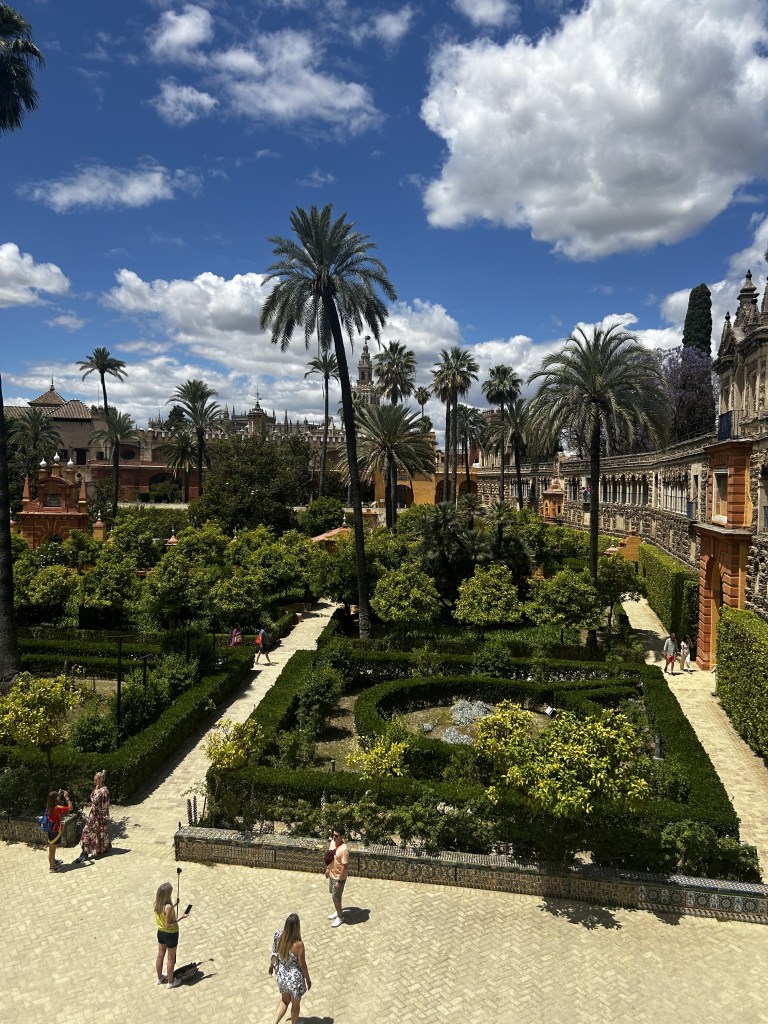
Top highlights of Seville: river walk on the Guadalquivir river, Alcazar guided tour, food tour and soccer game. We’ll forever enjoy tinto de verano and vermut drinks going forward. We enjoyed the leisure lifestyle – which includes two breakfasts, a bigger lunch around 2:30 then a tapas dinner after 9:30pm. The appreciation for community, conversation, culture and respect for their own history really stood out to us in Seville.
Madrid:
Our 4th leg of 4 in the trip, one that we didn’t have high expectations for. A massive, international city didn’t leave us the most excited for, but we felt the city energy immediately when we arrived. People, taxis, buses and trains everywhere – we felt somewhat at home compared to the medieval feeling Seville.
One word that was a top memory from Madrid and that is “Coque”. This was the 2nd to last night, booked as a surprise by Leo and really unsure of the dining experience we were getting ourselves into. It knocked our socks off. Started in the basement then into the ‘whisky room’ then the wine cellar, then into the kitchen and ended in the dining room. It was a full 3.5 hour experience. We were blown away and bellies were full by the time the clock hit midnight and we were ordering an Uber home.
Museo del Prado is the largest art museum within Europe, specifically with European art. We had an inevitable miss to begin as we missed the first hour of the tour which was luckily a walk through neighborhoods and not actually in the museum. We had the times mixed up, it was bound to happen! The tour itself was two hours inside the museum where we appreciated the paintings and storytelling from our art expert Andrea. Spanish artists like Goya, Velaquez, El Greco and Italian Rafael had their paintings featured amongst hundreds of other artists with their amazing work on display. This was definitely a highlight and must do in Madrid! Right behind the Museo del Prado is the amazing Retiro Park. We spent a few hours there walking through seeing the rose garden and Cristal Palacio.
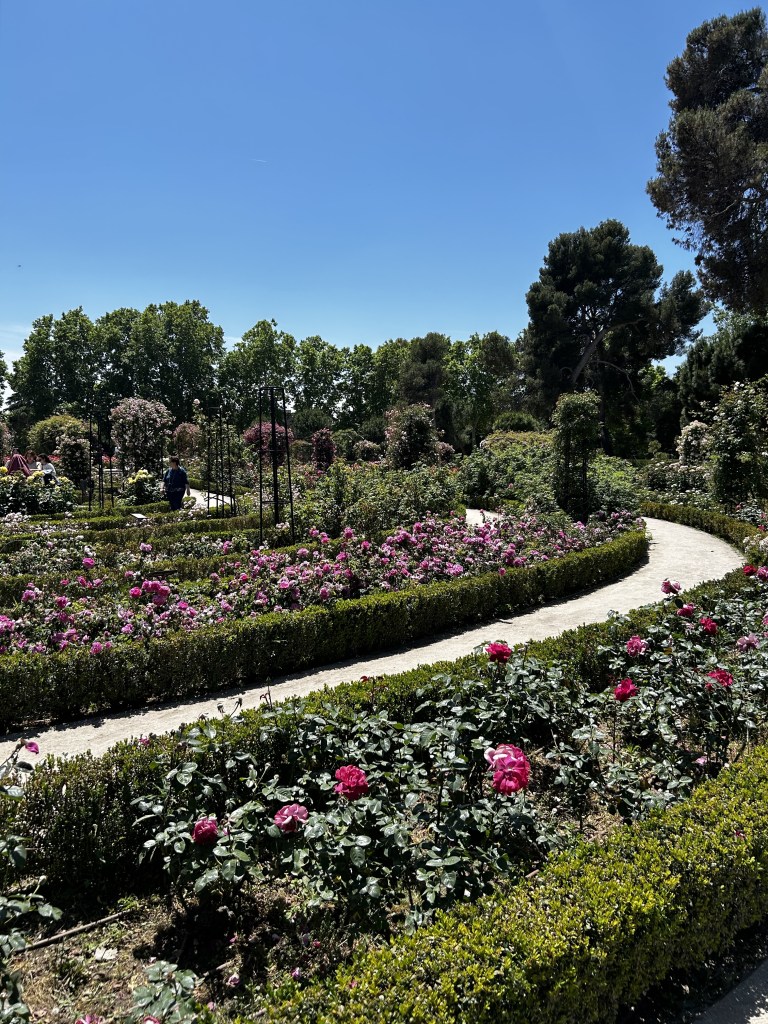
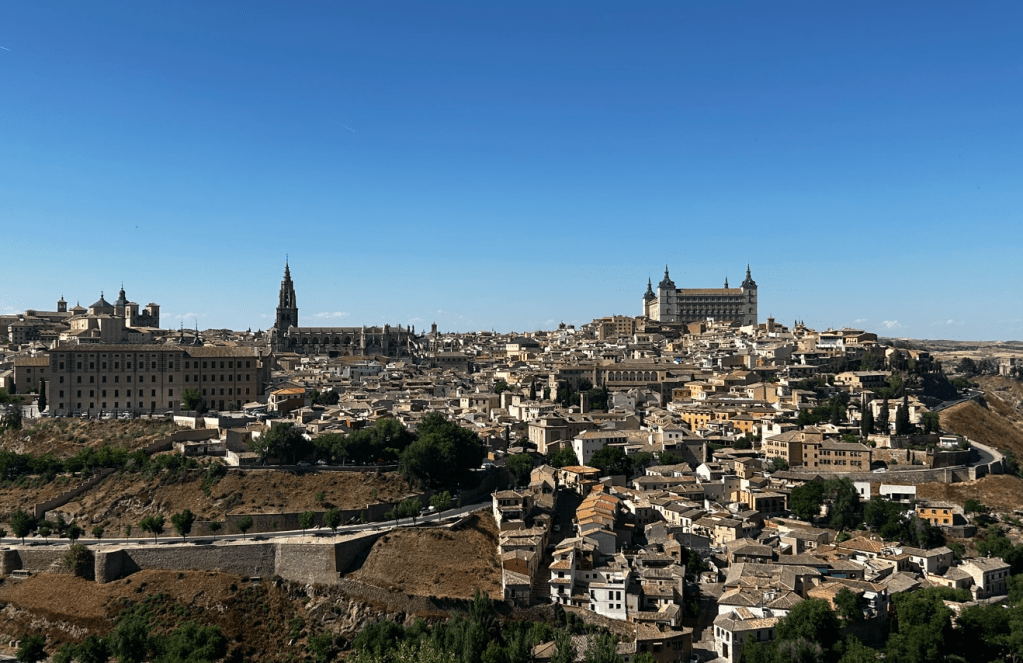
Toledo, Spain was a half day trip which we were glad to have visited the once capital of Spain. A small town up on the hill, surrounded by a castle-like wall and right on the Tagus river which runs through the Iberian peninsula of Spain and right into the Atlantic at Lisbon. The Tagus river tied the trip together from a start in Lisbon to our final full day in the charming medieval town of Toledo.
 Leo & Allison's travels